
Can I parry every attack in Resonance combat?
No. Yellow telegraphs can be parried; red telegraphs must be dodged for most of the game unless a mastery explicitly allows red parries.

Resonance: A Plague Tale Legacy combat teaches yellow parry, red dodge, kick block-breaks, grapnel pulls, and critical finishers before Theseus segments.
~9 min read
This Resonance: A Plague Tale Legacy combat guide is the melee rulebook for Resonance: A Plague Tale Legacy from Asobo Studio / Focus Entertainment: parry yellow telegraphs, dodge red unblockables, kick to break blocks, then close with criticals / finishers and grapnel disruption. Sophia fights on Crete's Minotaur's Island; Theseus segments share the color language with a thinner tool kit. Verified August 28, 2026 · Steam.
| Fact | Detail |
|---|---|
| Platform | Steam · PS5 · Xbox Series X|S · Game Pass Day One |
| Genre | Action-adventure · melee · light puzzles |
| Mode | Single-player |
| Player | Sophia — sword · dagger criticals · grapnel |
| Timeline partner | Theseus — shared telegraphs · no full grapnel kit |
| Telegraphs | Yellow = parry · Red = dodge (default) |
| Break tool | Kick opens blocked / defensive stances |
| Finisher | Critical / dagger window on stagger or recovery |
| Disruption | Grapnel yank · stagger · pull from pack / ledges |
| Assists | Narrative auto-parry/dodge available |
| Steam | App 2713000 |
Every serious swing in Resonance: A Plague Tale Legacy combat advertises. Yellow means you can parry: tighter timing, builds the stagger gauge, and opens a counter. Red means unblockable for most of the campaign — dodge. There is no third color. If you guess, you eat the hit.

| Telegraph | Correct answer | Why it matters |
|---|---|---|
| Yellow | Parry on the flash | Builds stagger; enables immediate counters |
| Red | Dodge | Default unblockable — skill masteries can change this later |
| No flash / light poke | Block, space, or trade carefully | Not every touch is a named telegraph |
| Multi-hit yellow string | Parry each beat or step out | One clean parry does not clear the whole string |
| Red into yellow mix | Dodge first, then re-enter on yellow | Do not greed a parry through the red |
Parry windows are tighter than dodge windows, but a clean yellow parry is how you climb stagger and stay glued to the target. Dodge is the safe answer when you are late, surrounded, or staring at red. Prefer parry when you can read yellow cleanly; never "practice" red parries on a kit that cannot do them yet.
You can answer attacks without a hard lock-on — press parry for yellows even mid-string. That is a gift. Abuse it by staying calm on color, not by spinning the camera hunting a target marker.
Once yellow and red are automatic, the next waste is swinging into a closed guard instead of kicking it open.
Kick is the block-break. Criticals / finishers are the payday after stagger or a fat recovery. Mixing them up is how beginners die with a full stamina bar and a confused dagger.
| Situation | Do this | Avoid |
|---|---|---|
| Enemy holds a guard / turtle stance | Kick to break, then resume yellow pressure | Whittling the shield with empty swings |
| Stagger gauge full / enemy reeling | Critical / dagger finisher window | Walking away to "reset safely" |
| You just parried a yellow | Immediate light pressure or critical setup | Backing off and letting stagger decay |
| You only have chip damage left on a weak foe | Light hits into critical for a clean kill | Charging a critical naked in a crowd |
| Sprint into a kick | Expect a jump-kick variant — plan for it | Trying to trigger an enhanced kick from a full sprint |
Enemies track life and stagger. Yellow parries, grapnel hits, and some kicks feed stagger. When the gauge tips, the critical / dagger window is the point of the system — take it. Body-swinging through a full stagger is leaving free damage on the table.
Focus-style specials can grant brief protection depending on skill choices, but a raw critical charge is interruptible. Soften a target with a light hit or two when you can, then commit. Kill confirms on a critical often pause nearby pressure for a beat — use that beat to re-read the next telegraph.
Kick opens the door; grapnel rearranges the room. Next section is when that yank helps versus when it griefs you.
The grapnel is not only traversal. In combat it deals stagger, yanks a target toward you, and can slam that body into friends. It is a disruption tool with arrival risk — whatever they were doing on the way in still matters.

| Use grapnel when… | Ready for… | Skip when… |
|---|---|---|
| An archer or backliner is pecking from safety | A yellow/red answer on arrival | You are already mid-red yourself |
| Two melee foes are stacked | The pulled body tagging the second | You need a clean 1v1 and already have stagger |
| You want stagger without committing a full string | A follow-up kick or critical | The target cannot be grappled (some spear / elite types) |
| A ledge or hazard is behind them | An environmental delete | The camera cannot confirm the drop |
While the line flies you often get a brief slow-mo aim window — pick the back of a pack when you can so the body collides through the group. The instant they arrive, your job is color reading again. Grapnel is setup, not a win condition.
Community combat notes flag spear-style foes and certain heavies as awkward or immune to pulls / kicks. If a yank fails twice, stop spending the animation — go back to yellow/red fundamentals or a skill mastery that answers their reds.
Crowds are where grapnel shines and where beginners panic-mash. The next section is the group decision table.
Matched by build plan, shared topics, and guide progression — not random related links.
Crowds in Resonance: A Plague Tale Legacy combat punish greed, not ignorance of a secret combo. Collapse the fight into a line, spend grapnel on stagger, and never chase a yellow parry through someone else's red.
| Crowd problem | Answer |
|---|---|
| Two angles at once | Create a corner or doorway; force a line |
| Archer + melee | Grapnel the archer or break line of sight, then 1v1 |
| All yellows, you are calm | Parry the closest, keep the camera honest |
| Mix of reds | Dodge priority target; do not greed the soft yellow |
| You are one hit from death | Space out, grapnel for breathing room, or burn a protective skill if unlocked |
Between reads, holding block while you micro-adjust left/right is safer than standing neutral. Some skill trees reward lateral movement during pressure with bounce / echo effects that also feed stun — treat those as advanced layers after yellow/red is solid. Details belong on skills.
Skills change what "default" means. The next section is the early unlock order that actually affects combat, not a full tier list.
Six branches with masteries sit on an escalating Resonance Point bill (~200 in the world, 165 for the full tree). Combat-relevant early picks are the ones that forgive a read or punish a crowd — not the ones that look flashy in the menu.
| Priority | Why it helps combat | Notes |
|---|---|---|
| Defensive / echo-style return tools | Turns held-block + lateral movement into stun on nearby foes | Strong if you play reactive |
| Heroic / surge-style kill rewards | Critical kills can grant brief protection | Strong if you already land finishers |
| Aegean Deflect-style parry upgrades | More stagger on parry; masteries can enable red parries | Huge vs spear / red-heavy kits |
| Bullbreaker-style kick upgrades | Faster stun from kicks | Regular kick is already good — upgrade after basics |
| Deep tree bottom skills | Situational | Often fine to delay until masteries on the top tools are bought |
If a chapter suddenly floods you with reds, refund into a red-parry mastery instead of "git gudding" into the same wall. Point math and branch names live on skills and resonance points; this page only cares about combat outcomes.
Charm stacks (parry window, crit chance, arrow mitigation, and related families) and Blade techniques change the same fights without spending Resonance Points. Grab them on the route — see charms and blades.
Sophia is not the only body you drive. Theseus segments need a shorter rule set.
Theseus keeps the yellow/red language and focus-style pressure but does not carry Sophia's full grapnel combat kit. Play tighter. Respect reds harder. Do not reach for a yank that is not there.
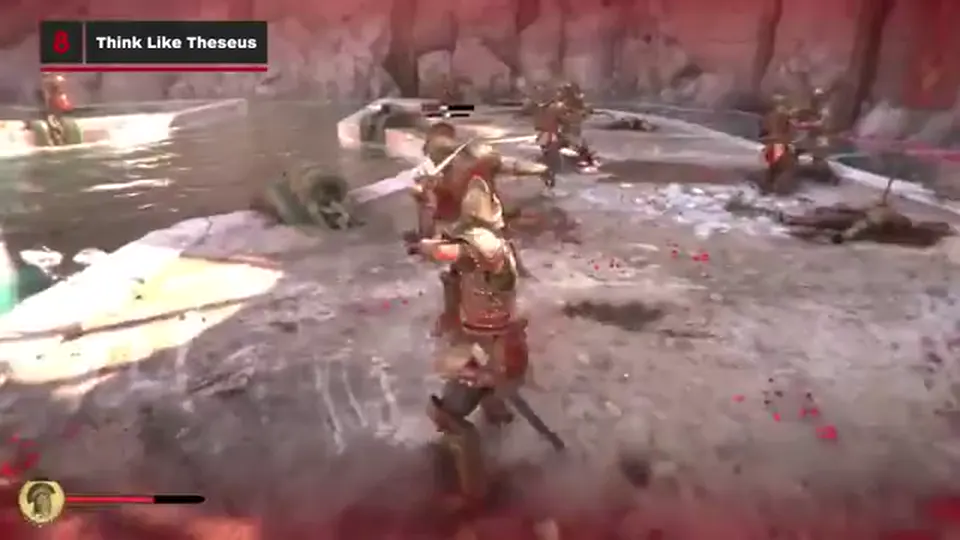
| Tool | Sophia | Theseus |
|---|---|---|
| Yellow parry | Yes | Yes |
| Red dodge | Yes | Yes |
| Kick / block-break | Yes | Yes (confirm per encounter) |
| Grapnel yank | Core disruption tool | Not the same kit — do not plan pulls |
| Focus / special meter | Builds from hits / parries / dodges | Present — lean on it when grapnel is missing |
| Skill tree | Sophia branches | Separate / limited set — spends do not freely transfer |
If you have been grapnel-carrying Sophia through messy rooms, Theseus will feel strict. That is intentional. Re-center on color reads and stagger criticals. When you return to Sophia, the grapnel will feel like a bonus again instead of a crutch.
For first-hours context and difficulty assists, jump back to the beginner guide; for missable habits, use tips.
No. Yellow telegraphs can be parried; red telegraphs must be dodged for most of the game unless a mastery explicitly allows red parries.
Kick breaks enemy blocks and defensive stances so you can resume pressure. Do not try to chip through a closed guard forever.
To yank backliners, feed stagger, and collide bodies through a pack. Always be ready to dodge or parry on arrival — especially if they were mid-attack.
Narrative can auto-parry/dodge. Higher difficulties expect manual telegraph reads and punish mistimed windows harder.
Same yellow/red language, thinner grapnel toolkit. Play more disciplined on reds and lean on focus tools instead of pulls.
Tools that forgive reads or pay off finishers — defensive echo effects, surge-style kill protection, then parry masteries that can answer reds. Full branch math: skills and Resonance Points pages.
Return to the beginner guide for first-hours pacing, then skills to spend points, or tips for missables.
August 28, 2026
Matched by build plan, shared topics, and guide progression — not random related links.